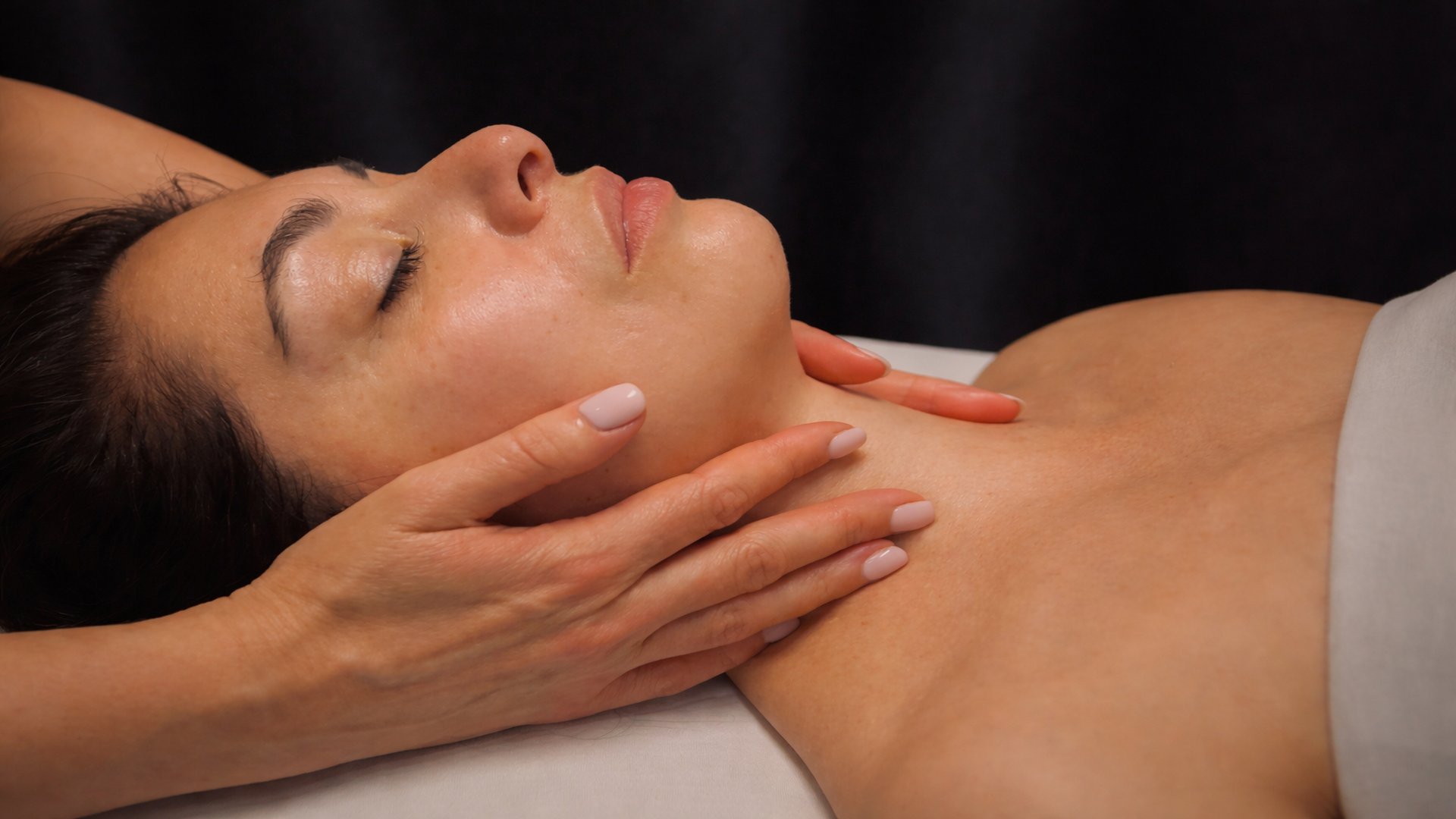
European Clinical Facial Expertise
At Arctic Healing Cryo, we combine advanced recovery technology with authentic European therapeutic traditions.
Our Lymphatic and Buccal Facial therapies are performed by Marina, a European-trained specialist with over 10 years of clinical experience in Eastern Europe, where manual facial techniques are developed with precision, anatomical knowledge, and medical influence.
Unlike typical spa facials, European facial therapy focuses on:
Structural lifting and sculpting
Lymphatic health and detoxification
Muscle release and fascial work
Post-surgical recovery support
Long-term skin regeneration
This approach delivers visible results — not just relaxation.
Smart Buccal Facial Massage
Smart Buccal Facial Massage is an advanced European-inspired facial massage technique that combines sculptural deep-tissue facial massage with intraoral (buccal) massage. This non-invasive approach is designed to support facial muscle balance, contour, circulation, and overall skin vitality — offering a natural alternative for those seeking visible facial refinement without injections or surgery.
The human face has a complex, multi-layered anatomical structure. At its foundation is the facial skeleton, with the lower jaw being the only movable bone, responsible for chewing and speech. Over the bones lie connective tissues, multiple layers of facial muscles, fascia, fat pads, and skin.
Facial muscles are divided into:
Masticatory (chewing) muscles
Mimetic (expressive) muscles
Some muscles attach to bone and skin, while others are deeply embedded near the oral cavity. Because of this layered structure, many facial muscles cannot be fully addressed through external massage alone.
Smart Buccal Facial Massage was developed to work through all facial layers by combining:
Sculptural (external) deep-tissue massage
Buccal (intraoral) massage performed from inside the mouth.
Anatomical Approach
This technique works with the facial muscular-aponeurotic systems:
SMAS (Superficial Musculo-Aponeurotic System)
Deep muscular and fascial structures
Fat pads (including buccal fat / Bichat’s fat pads)
By addressing muscles, fascia, ligaments, and connective tissues, the technique supports facial balance, tone, and natural contour.
Face–Body Connection
Facial muscle tension is directly connected to the:
- Neck and cervical area
- Shoulders and upper back
- Chest and arms
- Scalp and head muscles
For this reason, treatment begins with:
- Deep work on the neck, collarbone, and décolleté
- Massage of the shoulders and arms
- Scalp and head massage
This helps:
- Improve lymphatic drainage
- Support blood flow to the face
- Reduce jaw tension, headaches, and facial congestion
- Prepare tissues for facial sculpting
Sculptural Facial Massage (External)
The sculptural portion focuses on deep, layered work with:
Skin
Subcutaneous fat
Mimetic muscles
Masticatory muscles
Fascia and ligaments
This phase aims to:
Support muscle tone balance
Improve blood and lymph circulation
Encourage metabolic activity in tissues
Prepare the face for deeper intraoral work
Important principle:
The face does not function independently from the body.
Buccal Facial Massage (Intraoral)
Buccal massage is a deep intraoral technique performed inside the oral cavity using professional gloves.
It allows direct access to:
Deep mimetic muscles
Chewing muscles
Areas not fully reachable from the outside
Special attention is given to the jaw muscles, as chronic tension in this area can contribute to:
Heavy or tired facial appearance
Sagging along the jawline
Deep nasolabial folds
Facial asymmetry
Jaw discomfort and bruxism (teeth grinding)
Speech tension
Benefits & Ideal Candidates
Buccal Facial Massage is a refined, non-invasive facial experience and may be well suited for individuals who:
- Experience facial or jaw tension, including tightness in the lower face
- Notice facial congestion, puffiness, or fluid retention
- Wish to support natural jawline definition and facial balance
- Prefer facial refinement without injections or devices
- Value improved circulation and lymphatic flow for a refreshed appearance
- Seek a subtle, well-rested look that enhances natural facial expression
Recommended Frequency
Most clients, regardless of age, begin with an initial series of 8–10 weekly sessions, followed by ongoing maintenance every 3–4 weeks, with frequency adjusted based on individual facial tension patterns and goals.
Smart Buccal Facial Massage is not recommended for individuals with:
- Have active skin conditions, open wounds, or infections
- Are pregnant or breastfeeding
- Are experiencing an active herpes outbreak
- Have a history of cancer or epilepsy
- Have conditions affecting the blood or lymphatic system
- Have thyroid conditions
- Have had recent dental work or oral surgery
- Have facial implants (excluding dental implants)
- Have received Botox or dermal fillers within the past 14 days
Buccal (Intraoral) Facial Massage – FAQ
What is buccal facial massage?
Buccal facial massage is an advanced intraoral facial sculpting technique that works both inside the mouth and externally to release deep facial muscle tension, support natural facial contouring, and improve circulation and lymphatic flow. It is a non-invasive manual facial therapy.
Where did buccal facial massage originate?
Buccal massage originated in Europe, especially France and Eastern Europe, where manual facial sculpting methods have been practiced in luxury spas and medical-aesthetic settings for decades. The technique became widely recognized in the early 2000s.
Is buccal facial massage new in the United States?
Yes. Buccal facial massage is still relatively new in the U.S. and remains a specialty service. It is far more established in Europe than in the United States.
Why is buccal massage considered an advanced facial technique?
Buccal massage involves direct work with deep intraoral facial muscles and requires advanced understanding of facial anatomy, muscle function, lymphatic pathways, and pressure control.
Are many providers trained in buccal massage in the U.S.?
No. Only a limited number of U.S. practitioners have specialized training in authentic intraoral buccal massage. Because training standards vary, credentials and education matter.
Why should I verify practitioner credentials?
Because buccal massage involves intraoral muscle manipulation, clients should choose providers with documented training, strong anatomical knowledge, and professional hygiene protocols.
What are the benefits of buccal facial massage?
Buccal massage may help release facial and jaw tension, reduce puffiness, improve circulation and lymphatic drainage, support natural facial contour, and promote relaxation.
Is buccal massage a non-invasive alternative to injectables?
Buccal massage is a non-invasive, hands-on facial therapy that supports muscle tone and facial balance naturally. It does not replace injectables, but many clients choose it as a holistic or preventative approach.
Can buccal massage be combined with other treatments?
Yes. Buccal massage is commonly combined with lymphatic drainage, sculpting facials, like cryoskin facial, LED/light therapy, and other advanced facial treatments to enhance results.
Lymphatic Facial Massage
Lymphatic Facial Massage is an advanced, non-invasive therapy designed to support facial detoxification, reduce swelling, accelerate healing, and enhance natural rejuvenation. This specialized treatment is ideal for both aesthetic enhancement and post-procedure recovery.
Using refined European techniques, our therapist stimulate lymphatic flow to help eliminate toxins, decrease inflammation, improve circulation, and restore balance—resulting in healthier, firmer, and more radiant skin.
How It Works
Using light, rhythmic techniques, the therapist guides lymph fluid toward the lymph nodes to encourage natural elimination of excess fluid and toxins. The treatment focuses on the superficial layers of the skin and underlying lymph vessels rather than deep muscle tissue, making it safe, relaxing, and effective for facial rejuvenation and post-procedure support.
Benefits
Lymphatic facial massage offers both cosmetic and wellness benefits, including:
- Reduces facial puffiness and swelling
- Improves circulation and oxygen delivery
- Supports natural detoxification
- Enhances skin tone and clarity
- Relieves sinus congestion
- Decreases inflammation
- Promotes collagen stimulation
- Improves facial contour and definition
- Encourages relaxation and stress reduction
Who It is For
This treatment is ideal for individuals experiencing facial puffiness, water retention, sinus pressure, dull or tired-looking skin, inflammation, or slow recovery after cosmetic procedures. It is also beneficial for clients seeking gentle, non-invasive facial rejuvenation and long-term skin maintenance.
Lymphatic facial massage is especially helpful after fillers, threads, facelifts, or other aesthetic treatments, once cleared by a physician.
60-Minute Session
Ideal for facial detoxification, puffiness reduction, and circulation support. Recommended for maintenance and mild swelling. Best enjoyed once every 1–2 weeks.
Post-Treatment Care
To maximize results, drink plenty of water after your session to support lymph movement and detoxification. Light activity such as walking can help maintain circulation. Avoid alcohol, excessive salt, and heavy meals for several hours following treatment. Consistent sessions combined with cryotherapy and red light therapy may further enhance results.
FAQ
Is lymphatic facial massage painful?
No. The treatment is gentle and designed to be relaxing and soothing.
How soon can I receive this after facial surgery?
Most clients may begin gentle lymphatic massage 3–7 days after surgery with physician approval.
How many sessions will I need?
Some clients see results after one session. For optimal results, a series of treatments is recommended.
Can I combine this with other services?
Yes. It pairs well with cryotherapy, red light therapy, and facial sculpting treatments.
Disclaimer
Lymphatic facial massage is provided for wellness and supportive care purposes only and is not intended to diagnose, treat, cure, or prevent any medical condition. Clients with medical conditions, active infections, blood clots, or recent surgery should consult a qualified healthcare provider before treatment.